
“`html
“`html
Headline: Rodri’s World Cup Contract Pause Gives Manchester City A Delicate Midfield Problem
Content:
Rodri has not rejected Manchester City. He has not handed Real Madrid a green light, and he has not turned his contract situation into a public confrontation.
That calm surface is exactly why this has become such a delicate summer for City.
The Spain midfielder has parked serious talks over his future until after the 2026 World Cup. The Guardian and ESPN both report that Rodri wants the tournament to take priority before he addresses his club career.
His deal runs until 2027. Real Madrid noise has not disappeared. City are trying to rebuild a midfield while the market moves at record speed.
From the player’s perspective, that stance is calm and sensible. From City’s perspective, it creates a planning squeeze that cannot simply wait another month.
The Silence Shaping City’s Summer
Rodri’s value to Manchester City has never been measured only in tackles, passes, or trophies. He controls the emotional temperature of the side.
When Rodri is right, City play with a different level of authority. The back line can step higher. The attacking midfielders can take more risks. The whole structure feels less vulnerable to transition.
That is why a contract running to 2027 does not offer enough comfort. In ordinary terms, two seasons looks like protection.
In elite transfer-market terms, it marks the start of a pressure window.
If a player of Rodri’s status enters the final 12 months of his deal without an agreement, the conversation changes completely. Selling becomes more realistic. Holding becomes more expensive. A free exit becomes almost unthinkable.
City know this better than most clubs. Their recruitment model has usually stayed cold when it needs to be cold.
They have moved great players on before decline became impossible to hide. Rodri tests that model because he is not merely another elite player.
He is the tactical reference point.
The World Cup pause also gives Madrid the one thing every chasing club wants: time. Not certainty, not control, but time for the story to keep breathing.
Why Real Madrid Noise Cannot Be Dismissed
The Madrid element matters because this is not random speculation around a player chasing leverage. Rodri is Spanish, previously played for Atletico Madrid, and has spoken before about the pull of returning home.
Presidential politics have amplified the current link, but that does not make it harmless.
City’s task is to separate theatre from risk. A campaign promise from Spain is not the same as a formal bid. Public admiration is not the same as a negotiated agreement.
Even so, the wider situation is real.
Rodri is approaching a decisive contract period. Madrid have been openly attached to his name. City must protect themselves before the calendar starts working against them.
The important detail is not whether Madrid can sign him this summer. City need to know whether they can reach September with a clear answer.
A player who has just led Spain deep into a World Cup will return with greater leverage and greater profile. He may also return with a stronger emotional attachment to the idea of a Spanish endgame.
For City, the core danger is simple.
A renewal settles the project and allows recruitment to focus on support profiles. A delayed decision keeps the market guessing and forces City to plan for two futures.
A refusal to extend changes the sporting equation before the club can afford to admit it publicly.
That is why Rodri’s calm tone should not be mistaken for a calm situation. The player is doing what captains do at international tournaments: narrowing his world to the next match.
City have to live in the broader one.
The Anderson Price Tag Shows The Market Problem
The Elliot Anderson pursuit gives this story its sharper edge.
talkSPORT has reported that City have seen a package worth up to £121million rejected by Nottingham Forest. Talks are still live around the England midfielder.
ReadManCity has already examined how Anderson’s World Cup form turned City’s transfer chase into a £120m test, and the Rodri layer makes that pursuit even more significant.
Anderson is not a direct Rodri clone. That matters.
He is more mobile, more aggressive between zones, and more natural when carrying pressure through midfield. Rodri remains the single controlling reference.
Anderson could help City become younger, faster, and more physically assertive through the center of the pitch.
But if the Rodri question remains unanswered, every midfield target is judged through two lenses at once. Is he a complement, or is he part of an insurance policy?
Those are very different recruitment briefs.
A complement can be expensive if the squad feels settled. An insurance policy at £120million-plus becomes a much bigger strategic statement.
It tells the dressing room, the selling club, and the player himself that City are preparing for a structural shift.
This is why timing has become so important. Forest can hold firm because Anderson’s profile is rising. Madrid can wait because Rodri has not shut the door. City are caught between urgency and discipline.
The World Cup Load Adds Another Layer
City’s problem is not confined to contract law or transfer valuation. Physical load is part of the same equation.
The club confirmed before the tournament that 17 City players were chasing World Cup glory. That means the squad will not return to domestic preparation in one neat wave.
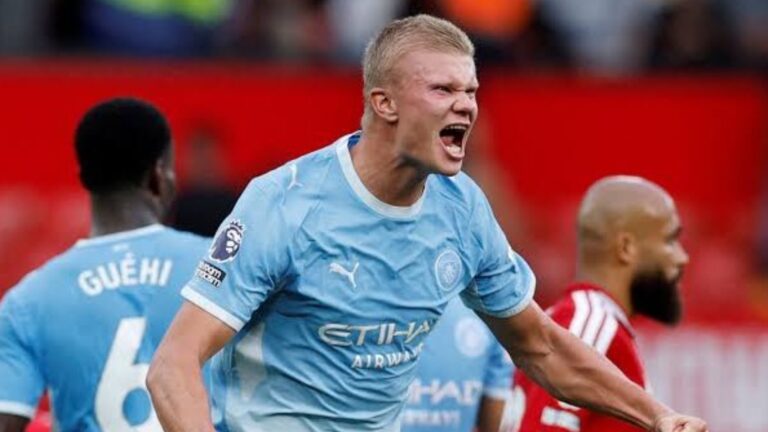
Erling Haaland’s Norway run, Rayan Cherki’s France involvement, Rayan Ait-Nouri’s Algeria progress, and Rodri’s Spain responsibility all feed into a fragmented summer.
Rodri’s own workload needs careful management, especially after seasons in which his fitness has been scrutinized closely. He remains City’s most important rhythm-setter, but the load around him has to be managed with precision.
If Spain go deep, the post-tournament recovery period eats into pre-season. If contract talks then dominate the return window, City risk beginning the campaign with their most important player surrounded by unresolved noise.
At elite level, uncertainty has a cost even when it does not produce a transfer.
It affects how quickly a new midfield unit can be built. It affects whether City push harder for Anderson, Sandro Tonali-style alternatives, or a lower-cost rotational profile.
It also affects whether academy players and secondary midfielders get meaningful August minutes, or merely fill gaps until the internationals return.
This is the hidden pressure in Rodri’s pause. The player has earned the right to focus on Spain, but City have also earned the right to ask for clarity quickly once the tournament ends.
What City Must Decide After The Tournament
The first decision is financial. If City believe Rodri can remain the central pillar of the next cycle, the renewal has to reflect that.
Salary matters, but sporting ambition matters too.
Elite players do not sign late-career contracts only because the numbers work. They sign because the project feels convincing.
The second decision is tactical. City have to decide whether the next midfield should still revolve around a single supreme controller.
If not, the side needs more running power, more vertical pressure, and a different spread of responsibility. Anderson’s appeal sits in that second vision, while Rodri’s best football belongs to the first.
The third decision is emotional. City supporters do not need reminding what Rodri has delivered.
Four Premier League titles, a Champions League-winning goal, and the authority of a defining midfielder all matter. But sentiment cannot be the whole strategy.
The club’s job is to honor what he has been while protecting what the team needs next.
That does not mean selling. It means refusing drift.
If Rodri signs, City can frame the summer as a controlled evolution. Anderson or another high-end midfielder can arrive to share the burden, not replace the axis.
If Rodri hesitates, the tone changes. Every major bid becomes part of succession planning. Every Madrid whisper lands louder. Every week closer to 2027 gives the player more control.
The Verdict
Rodri’s World Cup stance is professional, understandable, and completely rational. It is also inconvenient for Manchester City.
The club are not in crisis, but this is one of those quiet decision points that define future seasons before the first league table is printed.
City can afford to wait for Spain’s tournament to end. They cannot afford to let the issue drift deep into the summer.
The best outcome remains obvious: Rodri returns, signs, and City use the market to strengthen around him rather than prepare beyond him.
Yet the longer the pause continues, the more the Anderson pursuit looks like more than opportunism.
It starts to look like City building the next midfield before they know whether the current one still has its center.
“`
“`