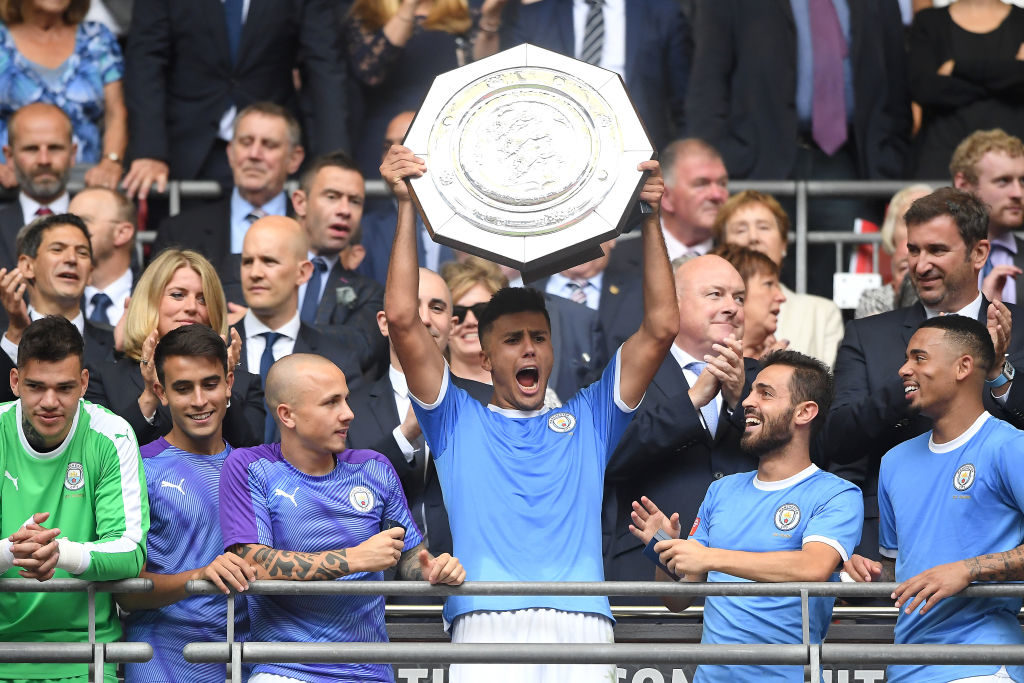

City supporters across the world are still buzzing about the summer transfer window. The club achieved nothing short of a massive squad reboot and a significant midfield upgrade.
New signings Enzo Fernandez, Elliot Anderson, Ayyoub Bouaddi, Iliman Ndiaye and Allan have everyone excited about the future of the Sky Blues. Equally important, the club made smart business decisions.
While sources vary across the internet, City seemed to have achieved these remarkable moves with a net spend of just £160 million to £175 million by selling players who were excess to requirements.
Four players City sold this summer now rank among the top six most lucrative outgoing transfers in club history: Savinho for £75 million, Tijjani Reijnders for £52 million, Rodri for £51 million and Nico Gonzalez for £48 million. Altogether, City earned a profit of roughly £64 million on this quartet alone.
However, the success of any given transfer window, either on the pitch or on the accountant’s ledger, can only be judged retrospectively. While there’s every reason to be optimistic about this summer’s signings, it’s vital to remember the old chestnut from Peter Drucker: “The only thing we know about the future is that it will surprise us.”
Given this reality, let’s take a look back at City’s five most significant summer transfer windows of the takeover era. It’s fascinating to review the players who surpassed expectations – and those who didn’t – to give us some perspective into City’s newest class.
This article is the first in a five-part series. We’ll begin by analysing the 2019 summer transfer activity.
Key signings: Rodri, João Cancelo, Pedro Porro, Angeliño
Rodri was the defining signing of this class, and one of the most important signings of the Guardiola era.
City bought Rodri from Atlético Madrid for roughly £60 million in July 2019 specifically as a defensively-minded holding midfielder who could eventually succeed Fernandinho. He was immediately productive in his first season, appearing in 52 matches and scoring the winning goal in the 2020 League Cup final against Aston Villa.
But the best part of Rodri’s story is what happened next. He gradually became the structural foundation of Pep’s midfield. He wasn’t simply Fernandinho’s replacement. He became a more complete version of a midfielder with massive passing range, physical presence, press resistance, positional intelligence and increasingly important goals.
His rise coincided with City’s most glorious period: Four Premier League titles, a Champions League, two FA Cups, four League Cups, the UEFA Super Cup and the Club World Cup. City fans will always remember him for scoring the Champions League-winning goal against Inter in 2023 and winning the Ballon d’Or in 2024.
There is a strong argument that Rodri was the single most consequential recruitment decision of this entire generation of City players.
The Cancelo conundrum
Cancelo’s impact is more complicated. City paid approximately £55m for him from Juventus, making him a major investment.
His 2019/20 season was very ordinary by the high standards he would eventually set: 33 appearances, one goal, one assist. Then Guardiola figured him out.
By 2020/21, Cancelo had become one of the most tactically adept full-backs in Europe. He could start at right-back then move inside during possession, effectively becoming another midfielder. His ability to operate on either flank gave Guardiola tremendous flexibility.
That 2020/21 season produced 43 appearances, three goals, five assists, the Premier League title, the League Cup and selection to the PFA Premier League Team of the Year.
His best period for City was 2020 to 2022, when he became an essential component of Guardiola’s positional system. He ultimately made 154 appearances, scoring nine goals.
Falling foul of Pep…
Cancelo’s relationship with Guardiola eventually deteriorated, and he left on loan in January 2023 after falling out of the manager’s plans.
Porro is a good example of City buying low, developing and parking the player, and ultimately extracting substantially more value.
City acquired the 19-year-old from Girona for roughly £10 million and immediately loaned him to Valladolid.
Then City sent him to Sporting in 2020 on a two-year loan. That’s where he exploded. Sporting ended up buying him for approximately £7.5 million in 2022 after he had won four trophies, including the Portuguese league title. More important, City reached a 30% sell-on agreement.
Sporting sold him to Tottenham for roughly £34 million in 2023, earning City roughly £10.2 million. All told, City made a profit of nearly £8 million on Porro, even though he never made a competitive first-team appearance for them.
It’s a prime example of a classic strategy that saw its peak in the 2026 summer transfer window: buy a promising young player cheaply, develop him in Manchester and/or elsewhere, retain the economic rights and sell at a significant profit.
No fairytale for Angeliño
Angeliño is another interesting business case because City actually knew his talent.
He was originally a City academy player, left for PSV, developed dramatically, and prompted City to exercise its £5 million buyback clause in 2019. At PSV, he had 34 league appearances, one goal and 10 assists, plus six Champions League appearances.
City brought him back hoping Guardiola could turn him into a first-team left-back, but it didn’t really work. He made 12 appearances for City in the first half of 2019/20, then went out on loan to RB Leipzig.
And here’s where Angeliño’s story becomes more intriguing.
He helped Leipzig reach the Champions League semi-final in 2020, then returned for another loan season and became an important attacking wing-back. Leipzig eventually exercised its option to make the move permanent.
Once again, City made a significant profit on a player who was by all rights not up to City’s standard. They reacquired him from PSV for approximately £5 million in 2019, loaned him out and eventually sold him for £15 million. So City made a profit of £10 million on a player that PSV and RB Leipzig developed for them.

Comments.
Loading comments…