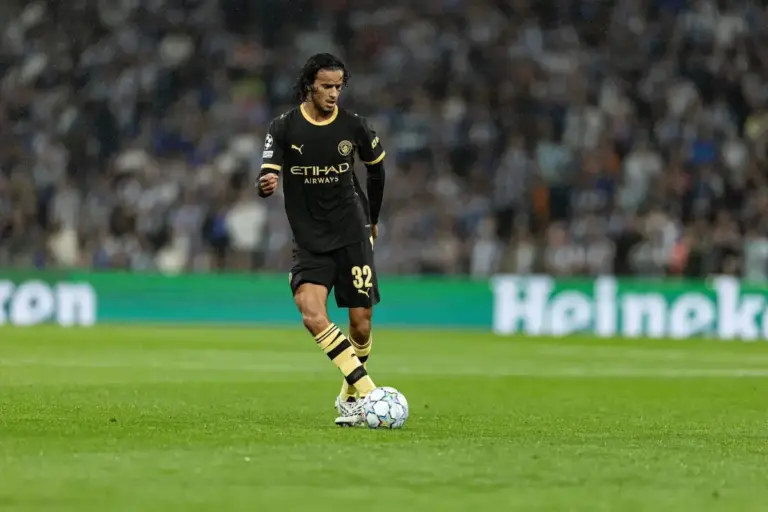

When City acquired Mateo Kovacic from Chelsea in the summer of 2023, the deal didn’t birth any screaming headlines: £25 million up front and £5 million in add-ons. It seemed a sensible, unspectacular fee for a decorated, 29-year-old central midfielder who wasn’t even guaranteed a starting spot in Pep Guardiola’s side.
Smashed no records. Didn’t go viral.
Now it seems quaint by the standards of what was about to come.
Three years later, City themselves paid £116 million for another central midfielder, a promising 22-year-old from Nottingham Forest. Not a man with four Champions League titles and 91 caps for his country on his CV.
Not to take anything away from Elliot Anderson. This story is more about the massive inflation in transfer fees in just the past three seasons. It’s like nothing we’ve ever seen before in the Premier League.
To make the case, we went looking for comparable 2026 transfer fees for central midfielders over the past few weeks and lined them up against the Kovacic deal. What we found isn’t just inflation. It’s a market that looks increasingly disconnected from what these players have actually proven on the pitch.
The base case
2023: Mateo Kovacic, Chelsea → Manchester City: £25m + £5m in add-ons
It’s worth remembering what City bought: a well-traveled midfielder who had played for four Champions League winners, three with Real Madrid and one with Chelsea. (Admittedly, he was not a major factor for any of those sides.)
But he had played 90-plus times for Croatia. He featured in his country’s run to the World Cup Final in 2018, their third-place finish in 2022 and their surge to the 2023 Nations League Final (where they lost to Spain on PKs).
City supporters will recall that in his first year in sky blue, Kovacic was a key cog in a glorious machine. He started 30 of 46 matches across all competitions and 25 of 42 in the Premier League as City won a fourth consecutive league title, the Super Cup and the Club World Cup.
In 2024/25, he came into his own. Rodri’s ACL injury forced Guardiola to lean on Kovacic — and he responded. For the season, he started 31 of 42 matches in all competitions, notched 10 goal involvements and earned a 7.21 rating from SofaScore, easily the best of his career.
In other words, City got something of a bargain for £30 million. That’s the number the 2026 deals outlined below needs to be measured against.
Joao Gomes, Wolves → Aston Villa: £34m + £4m in add-ons
Inflation over Kovacic: +26.7%
Gomes is arguably the closest stylistic match on this list: a ball-winning, tackling, box-to-box engine, signed as Youri Tielemans’ direct replacement. He led all Wolves players in passes attempted and completed last season.
The scepticism: This is honestly the most defensible fee on the list. Gomes will be 26 in December, making him three years younger than Kovacic was in 2023. But does that make him 27% more valuable?
Across 35 appearances and 2,800 minutes in league play last season, he had just two goal involvements for a Wolves club that was relegated. He’s also a disciplinary liability. He had 10 yellow cards in 2025/26, his second consecutive season in double digits.
The opinion here is that Villa overpaid because they were desperate for midfielders, having sold Tielemans to Manchester United and lost Amadou Onana to an ACL injury.
Mateus Fernandes, West Ham → Tottenham: £85m
Inflation over Kovacic: +183.3%
Yes, he’s only 21 with much room to develop. But it must be said the Portuguese midfielder’s transfer fee shocked many considering he is coming off a good-but-not great season with relegated West Ham. Tottenham are betting on developmental potential rather than proven, consistent performance.
The scepticism: Fernandes’ output last season was colored by the fact that the Hammers had him positioned deeper in the midfield than when he played at Southampton in 2024/25. In some regards, he adjusted well. He ranked high among his Premier League peers in possession won (83rd percentile) and duels won (82nd).
But he struggled to help West Ham’s attack. He ranked near the middle of the pack in progressive passes completed (64th percentile), progressive carries (58th) and key passes (55th). With Spurs scoring just 47 league goals last season, they need Fernandes to show more vigor advancing the ball up the pitch.
His £85-million fee obliterated the previous league record for a relegated player: Romeo Lavia from Southampton to Chelsea in 2023 for £53 million + £5 million in add-ons. But that’s what happens when clubs like United and Spurs get in a bidding war. Whether Fernandes turns out to be 183% “better” than Kovacic remains to be seen.
Elliot Anderson. Nottingham Forest → Manchester City: £116m
Inflation vs. Kovacic: +286.7%
Anderson’s move made him City’s record signing and the fourth-most expensive transfer in football history, a category that, historically, has been reserved almost exclusively for generational talents. (Ironically, Morgan Rogers’ became the fourth-most expensive transfer three weeks after Anderson’s deal was announced: £117m from Villa to Chelsea.)
The scepticism: Anderson is a genuinely promising 22-year-old England international with a strong breakout season at Forest. He is not, by any reasonable measure, currently a top-10 most valuable footballer on the planet by ability, which is effectively the claim £116m makes. Right now, he’s a top-10 midfielder in the Premier League.
Anderson seems to have a difficult time finding the net. Last season, he took 61 shots. Only 21% were on target and only 0.7% resulted in goals. In 2024/25, he took 49 shots. Only 14% were on target and only 0.4% resulted in goals.
But he’s not paid to score goals, some say. Last season, he did rank second among all Premier League midfielders in defensive contributions. He also ranked seventh in accurate passes per 90 minutes with 55. But compare that with the league leader: Rodri had 86.7 per 90. Same with line-breaking passes. Anderson ranked seventh with 6.80 per 90. Rodri led the league with 11.36 per 90.
Statistics notwithstanding, reporting around the deal describes a game of high-stakes poker between City and United for Anderson’s signature, with Forest holding out for a fee north of £100m. United blinked first. That’s not a valuation. That’s what happens when two rivals decide they cannot afford to lose a specific player to the other.
So what’s driving this fee explosion?
Talent inflation alone doesn’t explain a market where a Championship-relegated midfielder costs £85m. These forces look like the real drivers:
Scarcity, not quality. Every deal above was shaped by a specific club’s immediate need — Villa, United and City all found themselves recycling midfielders this summer. Fees negotiated under scarcity pressure reflect what an eager buyer will pay, not what a player is actually worth in equilibrium.
Direct bidding wars, not careful valuations. Fernandes and Anderson both involved two clubs actively competing for the same specific target. When two buyers won’t back down, the fee stops being a valuation exercise and becomes an auction — and auctions, by design, produce prices above fair value, not at it.
Broadcast and Champions League money still flooding the market, with City, Tottenham (chasing a Champions League return under new manager Roberto De Zerbi), and United all spending as though revenue growth justifies price growth at this pace — an assumption that’s never actually been tested against a genuine market correction.
The market has no memory. Kovacic’s £30m fee wasn’t seen as a bargain in 2023. It was a normal, sensible fee for a good player. The fact that it now looks cheap by comparison isn’t proof City got a steal three years ago. It’s proof the market has drifted so far, so fast, that recent history barely functions as a reference point anymore.