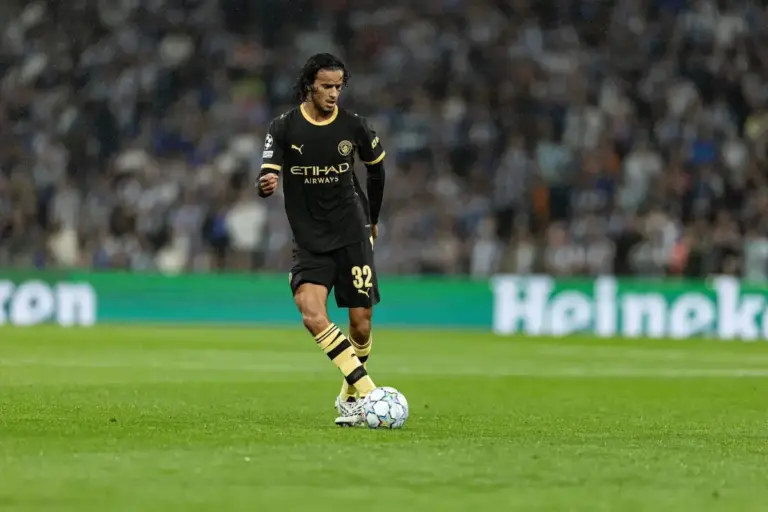
Enzo Maresca is now in his first season in the City dugout, and every new manager gets the same question from his first day: What can he actually do in year one?
History says the range of outcomes at this club is enormous. Some City managers have delivered trophies and title challenges in their very first campaign, while others have needed time to get going.
To put Maresca’s situation in context, we went back through the club’s history and ranked the best true managerial debuts — regardless of when in the season they took over, or what division City were playing in at the time. Here’s how they stack up.
5. Wilf Wild – 1932/33
Wild inherited a City side with almost no time to prepare and immediately delivered the club’s biggest achievement in six years: an FA Cup Final appearance. That was a genuinely rare feat for the City of that era. This was only the third FA Cup Final in the club’s history to that point, following the 1904 match (which City won) and the 1926 match (lost).
City’s poor league form in 1932/33 makes Wild’s FA Cup accomplishment all the more impressive. The side finished 16th in a 22-team First Division with 37 points from 42 games.
Happily, Wild proved year one wasn’t a fluke. City reached the FA Cup final again the following season and then won it in 1934. A few years on, the Wild Bunch claimed City’s first league title in 1936/37. His debut season was the first step in a genuine golden run, even if the league table that year didn’t show it.
4. Les McDowall – 1950/51
McDowall achieved one of the most underrated turnarounds in club history. He was installed as manager on 1 June 1950, a former City wing-half returning to Maine Road after a spell as player-manager at Wrexham. He took over a side that had just been relegated from the First Division with one of the worst records in the league: eight wins all season, a joint-second-worst goal difference (-32) and 29 points from 42 games.
McDowall also inherited the job under messy circumstances. His predecessor, Jock Thomson, had left back in February 1950, months before he arrived, leaving City effectively without a settled manager for a stretch of the relegation season.
McDowall’s initial move mattered: His first significant signing was Welshman Roy Paul. After Paul’s transfer to Colombia’s Millonarios fell through, McDowall beat out several English clubs — including Arsenal — to get his man. Paul went on to become the on-field leader of that 1950/51 side. He ultimately made 270 appearances for City and served as captain for seven seasons.
In 1950/51, City went 19-14-9, scored 89 goals and finished second, winning promotion straight back to the First Division. McDowall managed a +23-point swing from the previous season. In typical City fashion, it wasn’t too easy. City drew their last three matches of the season and nearly let Cardiff and Birmingham catch them, eventually holding onto second place by two points.
But turning a relegated, rudderless squad into a promoted one in a single season earns McDowall a place on this list.
3. Joe Mercer – 1965/66
Mercer took over a club that had gone through a massively chaotic patch. His predecessor, George Poyser, had been removed in April 1965, and City finished that season run by a committee. The Second Division campaign before Mercer arrived was a middling 41-point, 11th-place finish.
Mercer’s debut season flipped the script entirely. City won the Second Division in dominating fashion, earned promotion and, notably, didn’t lose back-to-back matches. That season is widely regarded as the launchpad for what’s remembered as a golden era for City under Mercer and Malcolm Allison.
City’s FA Cup run in 1965/66 was also remarkable. The Sky Blues beat a First Division Blackpool side in a third-round replay, then knocked out First Division Leicester City in the fifth round. In the quarterfinals, they battled Everton to two draws before falling in the third-match replay.
For Mercer, it was a debut season that delivered a trophy, provided FA Cup thrills and set the tone for years to come.
2. Kevin Keegan – 2001/02
Keegan came in from the England National Team and took over in May 2001 to lead a City side that had just been relegated from the Premier League. His first season produced one of the most dominant promotion campaigns English football has ever seen. City went 31-6-9 in the league, losing only once at Maine Road. They finished with 99 points (a new club record under the three-for-a-win system) and won the First Division title by 10 points.
The goalscoring was historic: 108 in the league, tying a club record set in 1926/27. Shaun Goater won the Golden Boot with 28 league goals. For sheer scale of dominance in a single debut season, this is close to unmatched in City history.
Keegan, who passed away just a few weeks ago at age 75, would go on to lead City for three more seasons. While his sides never quite matched the glory of his 2001/02 campaign, he did establish the club as one that belonged in the Premier League. It’s easy to forget that as recently as 1998/99, City were playing in the third tier. Every supporter owes Keegan a huge thank you for bringing the club back up to the top and keeping them there.
1. Manuel Pellegrini – 2013/14
There’s a case to be made that no City manager will ever top this one for pure results. Pellegrini inherited a side that had just finished second in the league under Roberto Mancini, 11 points behind The Club That Shall Not Be Named and lost in the FA Cup Final.
In year one, all Pellegrini did was win the League Cup (City’s first since 1976) and the Premier League in the most dramatic way possible.
With seven matches left to play, City trailed Liverpool by seven points following the Sky Blues’ 3-2 defeat at Anfield in mid-April. From that point, they went unbeaten. They won their last five matches, including a pivotal 3-0 victory at Old Trafford.
Meanwhile, Liverpool’s title challenge unraveled. Steven Gerrard’s slip against Chelsea cost them a win, and Liverpool collapsed at home against Crystal Palace after leading 3-0 to drop points with a 3-3 draw. City needed only a point on the final day of the season and dispatched West Ham 2-0 to lift the Premier League trophy by two points. It marked the first time Manchester City had won two trophies in a season since 1969-70.
Special season…
They scored 156 goals in all competitions, breaking the previous record of 143 goals set by TCTSNBN in 1956-57. Their final tally of 102 league goals was the second-highest Premier League season total, one short of Chelsea’s 2009-10 mark. This was also the first Premier League season when a team had three players each score at least 16 goals: Yaya Toure, Sergio Aguero and Edin Dzeko.
For good measure, Pellegrini guided the Sky Blues to the Champions League round of 16 for the first time, where they were beaten by Barcelona 4-1 on aggregate.
Every other manager on this list proved his debut season to be the first step toward something. Pellegrini’s debut season simply was the something.
One deliberate omission: Pep Guardiola – 2016/17
Pep doesn’t make the list because his first season at City, 2016/17, produced no trophies and a third-place finish — by his own account, the first trophyless season of his managerial career.
This is the clearest reminder that a less-than-perfect first season with a new manager doesn’t portend what comes next. Guardiola’s City went on to become the most dominant side in English football history within a couple of years of that shaky start. If Maresca’s first months don’t look like Pellegrini’s or Keegan’s, Cityzens have very recent proof that patience with a new man in the dugout can pay off in spectacular fashion.